Keratoconus could make everyday vision increasingly difficult. Blurred or distorted vision, glare, and frequent prescription changes would affect reading, screen use, and driving, especially at night. While glasses could give useful vision in earlier cases, some patients eventually need specialty contact lenses because the cornea becomes irregular.
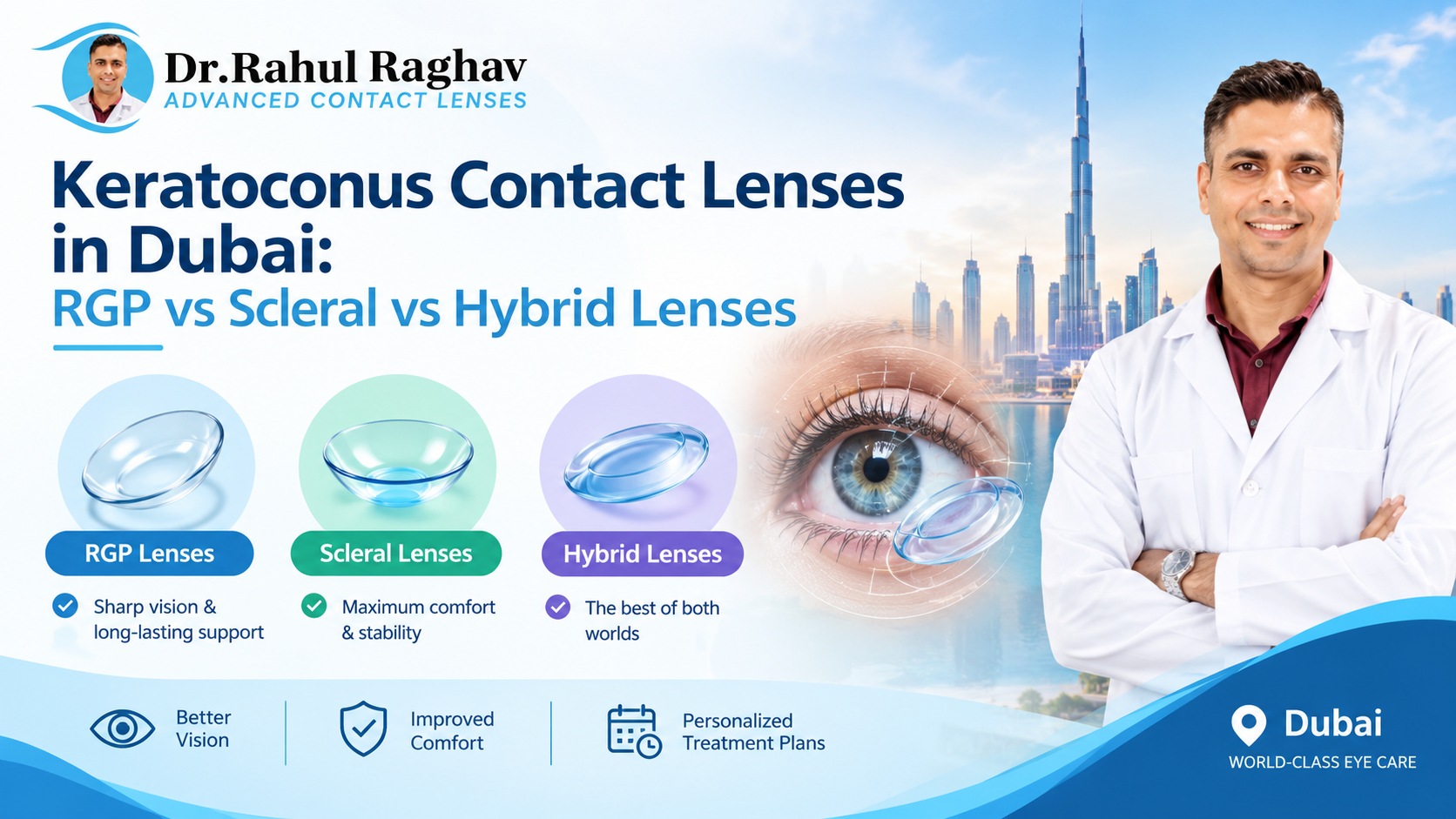
Keratoconus Contact Lenses in Dubai include rigid gas permeable (RGP), scleral, and hybrid lenses. Each design works differently and the most suitable option depends on corneal shape, visual needs, comfort, and the findings of a specialist examination. Dr. Rahul Raghav could understand your eyes and discuss the right options based on your individual condition.
What Is Keratoconus?
Keratoconus is a condition in which the cornea becomes progressively thinner and steeper, developing an irregular, cone-like shape.This could happen because of irregular astigmatism and reduced visual quality, even when a patient has an updated glasses prescription.
Common symptoms would include blurred or distorted vision, frequent changes in glasses prescriptions, glare or halos at night, light sensitivity, and difficulty seeing clearly in low light conditions. The severity and progression could vary between individuals, making regular eye examinations important.
RGP Contact Lenses
Rigid gas permeable (RGP) lenses give a regular optical surface over the irregular cornea. This could improve vision by reducing the optical effects of corneal irregularity. RGP lenses are smaller than scleral lenses. Because they are rigid and fitted directly to the eye, some patients would need an adaptation period. Proper fitting is important for achieving useful vision, comfort, and lens stability.
Scleral Contact Lenses
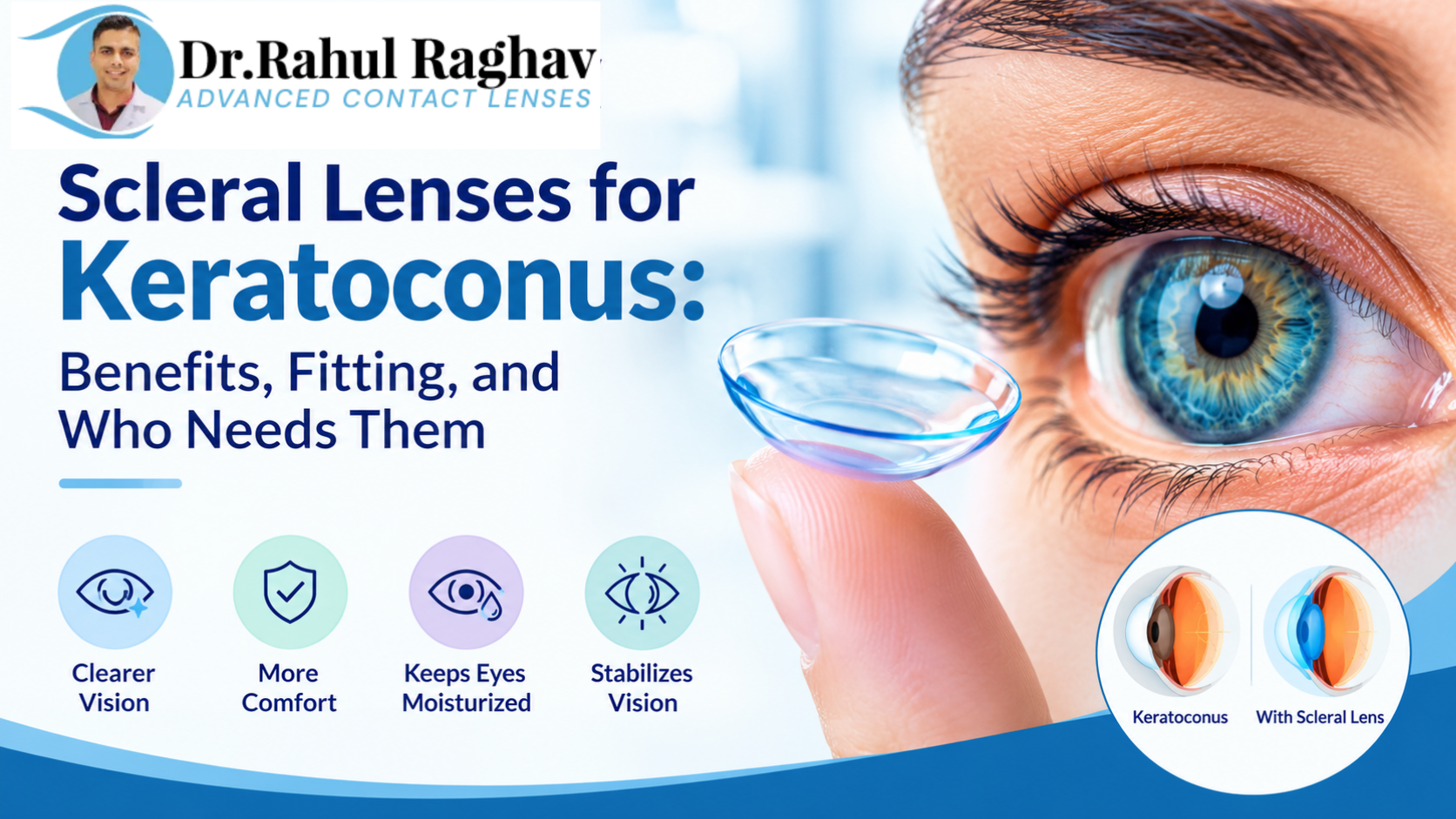
Scleral lenses are larger rigid lenses designed to vault over the cornea and rest on the scleral or surrounding ocular surface. A fluid reservoir remains between the lens and cornea. This design could give a stable optical surface and would be useful for some patients with significant corneal irregularity or those who do not achieve satisfactory results with smaller lenses. Scleral lenses require specialist fitting and appropriate instruction for insertion, removal, and care.
Hybrid Contact Lenses
Hybrid lenses combine a rigid central portion with a softer peripheral skirt. The rigid centre give optical correction, while the softer outer portion is designed to support comfort and stability.A hybrid lens would be suitable for selected patients, but it is not automatically better than an RGP or scleral lens. The choice depends on corneal shape, visual needs, comfort, and lens performance.
How Is the Right Lens Selected?
There is no single contact lens that is best for every person with keratoconus. An eye specialist would understand visual acuity, refraction, corneal topography or tomography, corneal thickness, and overall eye health. The aim is to achieve useful vision with right fit and acceptable comfort. Specialty contact lenses primarily improve the visual effects of keratoconus. They do not replace treatments intended to tackle disease progression.
Keratoconus Treatment in Dubai
Keratoconus Treatment in Dubai depends on the severity and progression of the condition. Some patients would be managed with glasses or specialty contact lenses, while others would need monitor or treatment for progressive disease.
Corneal mapping could help monitor changes in corneal shape. If progression is identified, an ophthalmologist would consider corneal cross linking to strengthen the cornea and reduce the risk of further progression.
Corneal Cross Linking Dubai
Corneal Cross Linking Dubai would be considered for suitable patients with progressive keratoconus. The primary purpose of corneal cross linking (CXL) is to strengthen the corneal tissue and slow or halt progression rather than guarantee improved vision.
CXL commonly uses riboflavin and ultraviolet light, although treatment protocols could vary. Suitability depends on factors such as corneal thickness, disease characteristics, and evidence of progression.
Cross linking does not eliminate the need for glasses or specialty contact lenses. Patients should discuss expected benefits, risks, recovery, and alternatives with their ophthalmologist.
Keratoconus Eye Treatment Dubai
Keratoconus Eye Treatment Dubai should be tailored to each patient. Management would include observation, glasses, specialty contact lenses, or corneal cross linking. In advanced cases, selected surgical procedures would also be considered.
Factors such as corneal thickness, irregularity, visual function, progression, and contact lens tolerance could influence the treatment plan.
Keratoconus Surgery Dubai
Keratoconus Surgery Dubai would be discussed in selected advanced cases, particularly when adequate visual function cannot be achieved with glasses or contact lenses or when other approaches are unsuitable.
Depending on the condition of the cornea, procedures such as intracorneal ring segments, deep anterior lamellar keratoplasty, or corneal transplantation would be considered. Surgery is not needed for every patient with keratoconus, and personalized assessment is very important.
Keratoconus Treatment Cost in Dubai
Keratoconus Treatment Cost in Dubai varies because patients may require different examinations, contact lenses, or procedures. Costs can depend on corneal imaging, specialty lens fitting, lens type, follow-up appointments, cross-linking, and whether one or both eyes require treatment.
Rather than relying on a general price, patients should request an individual estimate and confirm what diagnostic tests, fitting appointments, and follow-up care are included.
Keratoconus Care With Dr. Rahul Raghav
Dr. Rahul Raghav could understand patients with keratoconus and discuss appropriate management options based on their examination findings. Depending on the individual case, this would contain monitoring, specialty contact lenses, corneal cross linking, or selected surgical options.
Right treatment depends on the condition of the cornea and the patient’s visual needs. A comprehensive assessment can help patients understand their options and determine an appropriate next step.